Find your flight club.
An energetic icebreaker gets everyone involved. Teams of 6–8 keep every pair of hands in the build. For groups of 80+, wristbands help mix the crews.
YOUR TEAM’S NEXT BIG THING IS UP.
Ordinary materials.
Extraordinary airtime.
Design it. Build it. Send it soaring.
Turn a roomful of teammates into a flight club.
A wing. A wild idea.
A teammate saying,
“Wait. What if we tried this?”
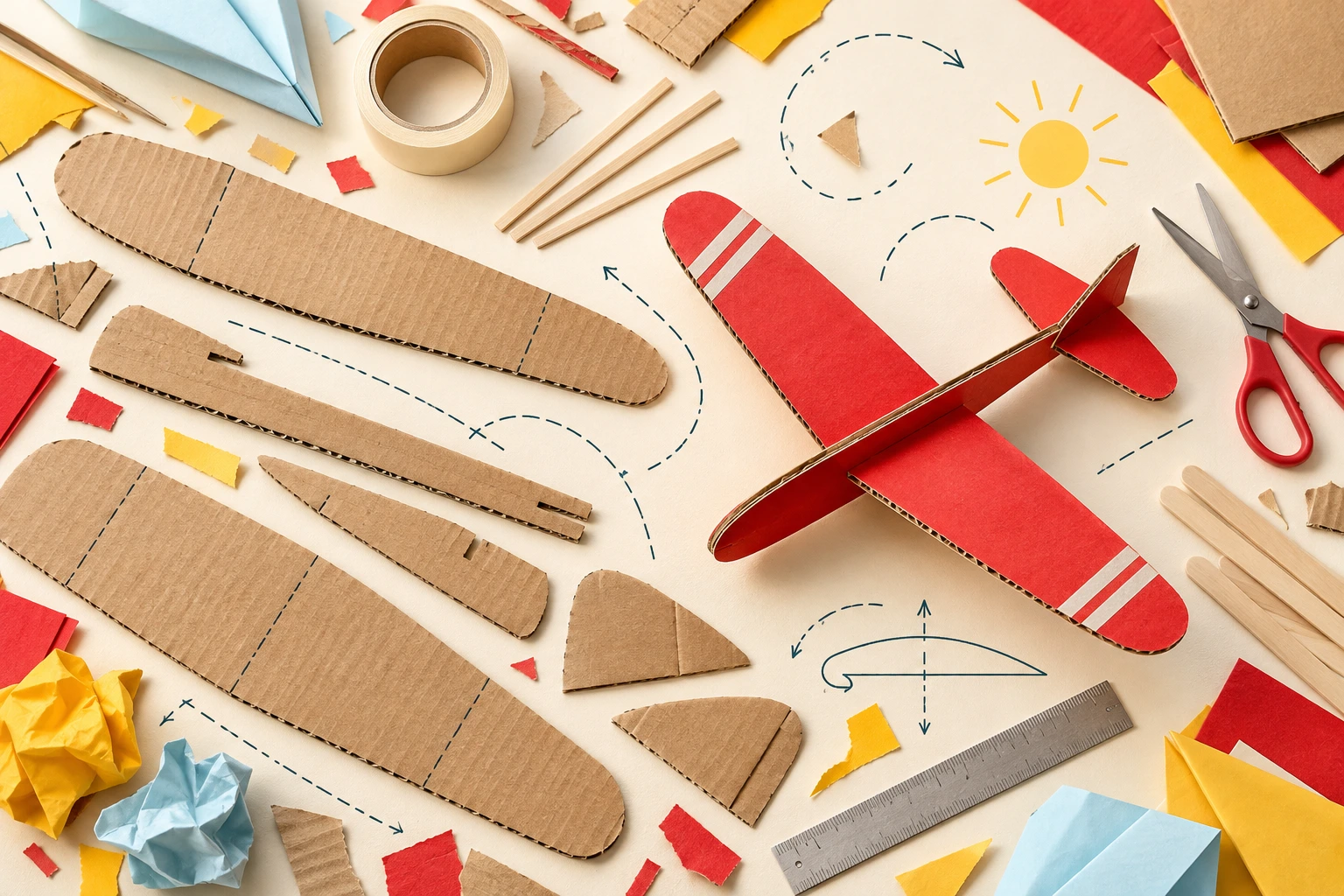
Teams earn their materials through light physical challenges and brain-teasing puzzles. Then it’s time to turn shared ideas into sustainable gliders.
An energetic icebreaker gets everyone involved. Teams of 6–8 keep every pair of hands in the build. For groups of 80+, wristbands help mix the crews.
Experiential challenges combine light physical tasks with cerebral puzzles. Communication and collaboration help your team earn its way to the workbench.
Design, construct, adjust, and test your sustainable glider. Your host and facilitators keep the experience moving while your team supplies the imagination.
Put your creation through the air games. Then bring your best build—and your most confident throwing arm—to the farthest-flight finale.
One shared creation. Three chances to surprise yourselves. These are the air games your team is building toward.
Find the balance that keeps your glider in the air. A clean launch. A smooth flight. A landing everyone has to walk to.
Turn your team’s design into a blur. Tweak the build, sharpen the launch, and find out who brought the speed.
Creative flight gets its moment. Surprise the crowd with the glider that does something nobody saw coming.
Part experiment. Part air show.
Entirely your creation.
Pick a build, tune the throw, and take to the sky. Cruise assist handles a smooth flight; switch it off when you want to dive, climb, and try a loop.
The runway is yours. Choose your build and launch when you’re ready.
Use the power slider and launch, or hold the charge button and release to throw.
A playful flight simulation, not an engineering prediction. Materials and build options here are illustrative; your producer confirms the live event kit. Each test flight runs for up to 15 simulated seconds. Records stay only for this page visit. Prefer less motion? Your device’s reduced-motion setting shows the completed assisted flight directly.
The strongest design usually starts with someone saying “what if?” and someone else saying “let’s try it.” Bring both people. Bring the whole crew.
A wild thought gives the team something new to try.
Careful building turns the shared idea into something launchable.
Small adjustments become the big difference on the flight line.
Sustainable gliders, built by hand and launched by a throwing arm. Your team brings the imagination; the event team brings the materials and guidance.
No aerospace degree required. The construction is designed for creative hands, and facilitators coach folds and fixes along the way. It’s about designing, communicating, and experimenting together.
Farthest glide, fastest glider, and most amazing trick. The grand finale is the farthest-flight competition, where teams put their best build to the test.
Teams cap at eight so everyone can help design, build, and fly. There’s room for different strengths and a part for every teammate.
Yes, in a large indoor venue with suitable open space. Outdoor lawns and courtyards work too. Share your venue and headcount with your producer to plan the flight line.
A dynamic icebreaker brings the crews together, followed by experiential challenges with light physical tasks and cerebral puzzles. For groups of 80 or more, wristband mixing helps form the teams.
Your preferred date, headcount, venue or city, and whether you’re planning an indoor or outdoor event. Include anything your producer should know about the group and the available space.
Bring the big thinkers, the careful builders, the optimistic throwers, and the people who cheer before it even lands.
Edit, copy, and send to your event producer. Nothing is submitted here.